|
Getting your Trinity Audio player ready...
|
The Alight Motion vs After Effects: Which One is Better in 2026?
In 2026, video editing and motion graphics tools are more powerful than ever, making the Alight Motion vs After Effects debate more relevant for creators of all levels. Among these tools, Alight Motion and Adobe After Effects are two popular names but they serve very different types of users. This in-depth Alight Motion vs After Effects comparison provides a complete, honest, and fully updated analysis to help you decide which tool best fits your workflow, skill level, and creative goals in 2026. Whether you are a mobile creator or a professional animator, understanding Alight Motion vs After Effects will help you make the right choice.
Overview of Alight Motion and After Effects
In the Alight Motion vs After Effects comparison, both tools are motion graphics powerhouses, but their platforms, target users, and overall capabilities are completely different. Alight Motion vs After Effects highlights a clear divide: one is designed specifically for mobile creators who need flexibility on the go, while the other is built for professional desktop users who demand advanced control, industry-level tools, and high-end production workflows.
What is Alight Motion?
Alight Motion is a mobile-based motion graphics and video editing app available on Android and iOS. It is popular among social media creators who want quick, stylish edits without using a computer.
Key Features of Alight Motion
Pros of Alight Motion
Cons of Alight Motion
What is Adobe After Effects?
Adobe After Effects is a professional desktop motion graphics and visual effects software used in films, advertisements, and high-end video productions.
Key Features of After Effects
Pros of After Effects
Cons of After Effects
Alight Motion vs After Effects: Core Feature Comparison
This comparison of Alight Motion vs After Effects focuses on real, practical differences rather than repeating similar features. Alight Motion is a mobile-based motion graphics app built for creators who want fast results, simple controls, and flexibility on smartphones. It supports keyframe animation, vector graphics, blending modes, and basic effects, making Alight Motion vs After Effects an important choice for YouTubers, gamers, and social media editors who prefer speed and ease of use.
User Interface & Workflow
- Alight Motion: Touch-based, simple, fast
- After Effects: Timeline-heavy, complex, professional
Motion Graphics & Animations
Alight Motion is well suited for basic 2D animations and simple motion graphics, making it a practical option for mobile creators and beginners. On the other hand, After Effects supports advanced 2D workflows along with true 3D animation capabilities, allowing professionals to create complex scenes, depth-based visuals, and high-end cinematic animations.
Effects & Visual Filters
Alight Motion offers a solid range of built-in effects that are easy to use and work well for everyday edits and social media content. In contrast, After Effects goes much further by supporting cinematic-level effects through powerful third-party plugins, making it the preferred choice for high-end visual effects, advanced compositing, and professional motion graphics projects.
Keyframe Animation Control
Both tools support keyframe animation, allowing creators to control motion and timing, but After Effects stands out by offering far greater precision through advanced graph editors and expressions. These powerful features give professionals deeper control over animations, making complex, smooth, and highly customizable motion designs possible.
Templates & Presets Availability
- Alight Motion uses XML presets
- After Effects uses professional templates & plugin presets
Platform & System Requirements
- Alight Motion: Android / iOS
- After Effects: Windows / macOS (High-end PC required)
Export Quality & Formats
After Effects supports a wide range of professional-grade codecs, making it ideal for high-end production workflows and broadcast-quality exports. In contrast, Alight Motion is optimized for social media–friendly formats, allowing creators to export videos quickly in sizes and settings that work best for platforms like Reels, Shorts, and TikTok without complex configuration.
Performance & Ease of Use
Alight Motion is noticeably faster for short edits and quick creative tasks, making it a practical choice for mobile-based content creation. After Effects, while heavier and more demanding on system resources, remains unmatched when it comes to handling long, detailed, and highly complex projects that require advanced compositing and precision control.
Pricing & Subscription Comparison (Updated)
Alight Motion – Pricing & Plans
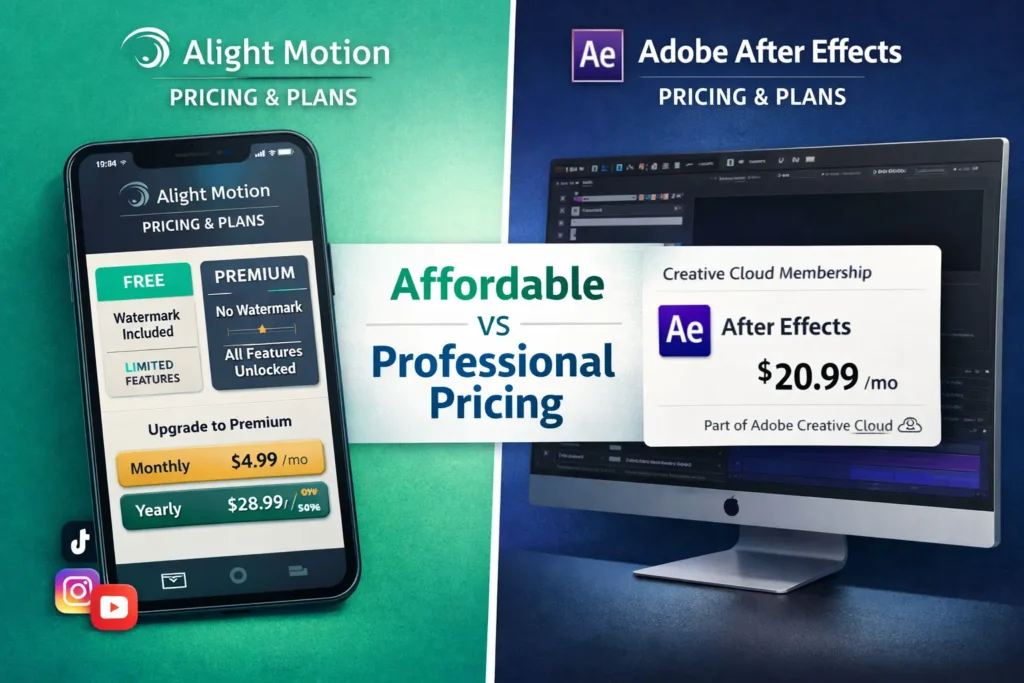
A free version is available for beginners to explore the basic features, while the affordable premium plans make it an ideal choice for students and content creators who want advanced tools without a high financial commitment.
Adobe After Effects – Pricing & Plans
It requires an Adobe Creative Cloud subscription, which can be expensive, but it delivers professional-grade tools and industry-standard capabilities that justify the cost for serious creators and production teams.
Who Should Use Alight Motion?
Choose Alight Motion if you are:
- A beginner
- A mobile editor
- A social media content creator
Who Should Use After Effects?
Choose After Effects if you are:
- A professional editor
- A filmmaker or animator
- Working on large projects
Final Verdict: Which One Is Better for You in 2026?
There is no single winner.
- Alight Motion = Best for mobile creators
- After Effects = Best for professionals